Friday, April 4, 2014

Why are so many 7/11 in Thailand - 7 in my street alone?

Yeah we will get a 7/11 across the street, a new one. Not that we don't have 7/11s here - we have about 7 in a stretch of 1 Kilometer. But this one will be even closer - just across the street. I am wondering about the business concept: Why is 7/11 opening a new shop even next or opposite to an existing one?

So I did a little bit of research and found two kinds of answers: One is that Thai people don't like to walk (far), and so there is enough business for all of the shops.

The other explanation is that CP, who is the franchise business owner, doesn't really care about the success - so it gives you a licence as long as you pay for it. People told me that CP would even wait until it turns out your 7/11 runs well and then opens it's own one just next to you. That doesn't makle sense to cheat on your own business partners, but it wouldn't surpass me either if true.

Some numbers:

The first 7/11 in Thailand opened - according to Richard Barrow - on June 1st 1989 on Patpong Road in Bangkok.

The 7/11 Website says: "At the end of the year 2012, the Company had a total of 6,822 7-Eleven stores nationwide. Of the total, 3,177 stores are in Bangkok and vicinity (47 percent) and 3,645 stores are in provincial areas (53 percent). According to type of store, there are 2,984 corporate stores (44 percent), 3,320 franchise stores (48 percent) and 518 sub-area license stores (8 percent). Presently, an average of 8.3 million customers visit 7-Eleven stores each day."

So indeed nearly half of the shops belong to CP, while the others are franchised. The Global Post was running a story about the success of the minimarts in South East Asia. In Thailand the story is even more successful since CP is on e of the countries biggest food producers and can sell it's own products in it's 7/11 shops. A perfect combination.

On Thaivisa people gave advice about the estimated costs of a franchise licence (1.6 million Baht/5years) and the risks that comes with it (long working hours, competition, small profit margin).

CP itself gives a detailed overview about the costs for a 7/11 franchise:
Costs: Type 1 Type 2
Total - 1,480,000 ฿ 2,630,000 ฿


My conclusion is that the risk is pretty low for CP and Seven Eleven and it the benefits are bigger. First of all, rent and salaries are still low in Thailand for those shops. The turnover should cover it. CP clearly wants to dominate the market and location is key to this. They target Family Marts and others, but I doubt they could harm Tesco Express because of its fresh products.

Also, a Seven Eleven shop is very standardised, and can be set up within days. That saves a lot of money. Same goes for equipment: CP just orders large scale of shelves and gets good prices, I assume. And as above mentioned being your own supplier with some of the food things are more easy.

Do I like 7/11? Yes, because it is convenient and available. Forgot the milk? No problem? Want a snack: They wave it for you (what is modern Thai for heating, and means to warm it up in a microwave).

Thai Life Insurance Video: They still are the best when it comes to emotions


Thai ads became already world famous for the emotional touch, and this one is no exception. Well done!

Thursday, April 3, 2014

One year living in Thailand: Land of food

Time is running fast. It's already a year since we moved from Laos to Thailand. This time, it wasn't much of a change, since Lao and Thai culture are quite similar and we travelled to Thailand quite often. Even the language is not so different. So, no real culture shock this time. But maybe a bit.

Coming from undeveloped Laos, where we had no cinema, no supermarket, no reliable hospital, Thailand was kind of a paradise. That's why we often travelled from Vientiane to Udon Thani or Khon Kaen. So we had high expectations living in paradise. But of course, it's not. Bangkok is a big city, we learned fast, and it takes a lot of time to get around - in particular when you live down south like us. The expat community is also different: Less NGO people, but more expats doing "something" here and living here since centuries. And a huge business community of course.

One rule for us since we left Germany is to stay a a bit away from the expat community, at least most of the time. We left Germany for a reason, so not need to have sauerkraut or pork leg or listen to complains. And here comes the major difference to Laos: It is more difficult for me to get closer to Thai people than to Lao people. I still have very close friends in Laos, but most of the people I know in Thailand I knew already when we moved here. We live in a Moo Ban, a compound with 90 percent Thais, so there is no lack of local people. But only our neighbours opposite are open and talk with us (maybe because they are Christians, not Buddhists, and look for likewise people). It is not a language barrier, since many here speak English and my Thai is good enough for a chat.

I heard it a lot, that Thais actually don't like foreigners. I don't think that's true in general. There are some they like foreigners, and some they don't like them. As it is the fact in every country. Same goes with the Land of Smiles: It is a myth. some smile, some not. Some are friendly, some are not. Only stereotype that fits in my experience is the shyness, mainly when it comes to practise English.

Beside this, life here isn't bad. We have a swimming pool that we rarely use, but I am in the gym every day. We have awesome medical services, even the private local hospital near us is reasonable enough for smaller injuries like my dog bite.

Food is a big plus, it's cheap and delicious. Land of great food might fit better actually. Compared to Laos, it is more delicious and there is more variety, but the Thai beer sucks. Really sucks.

Driving here isn't as bad as expected, both with car and motorbike. It is dangerous, of course, but once you are aware of it, it's not much more different from Vietnam. Just never drink and drive, don't text and drive and always think and care about the other drivers.

So we are looking forward to our second year in Thailand.

Wednesday, April 2, 2014

Street food in Thailand: Why cooking anymore?


I am a passionate cook, and I really enjoy to do it. Everyday I usually cook one or two meals. But cooking for two comes with a price, literally. Compared to the street food I can buy just around the corner, home made food is expensive (and I am not talking about western food). No way I can make a pumpkin curry for 20 Baht - the pumpkin alone costs at least 60 baht.

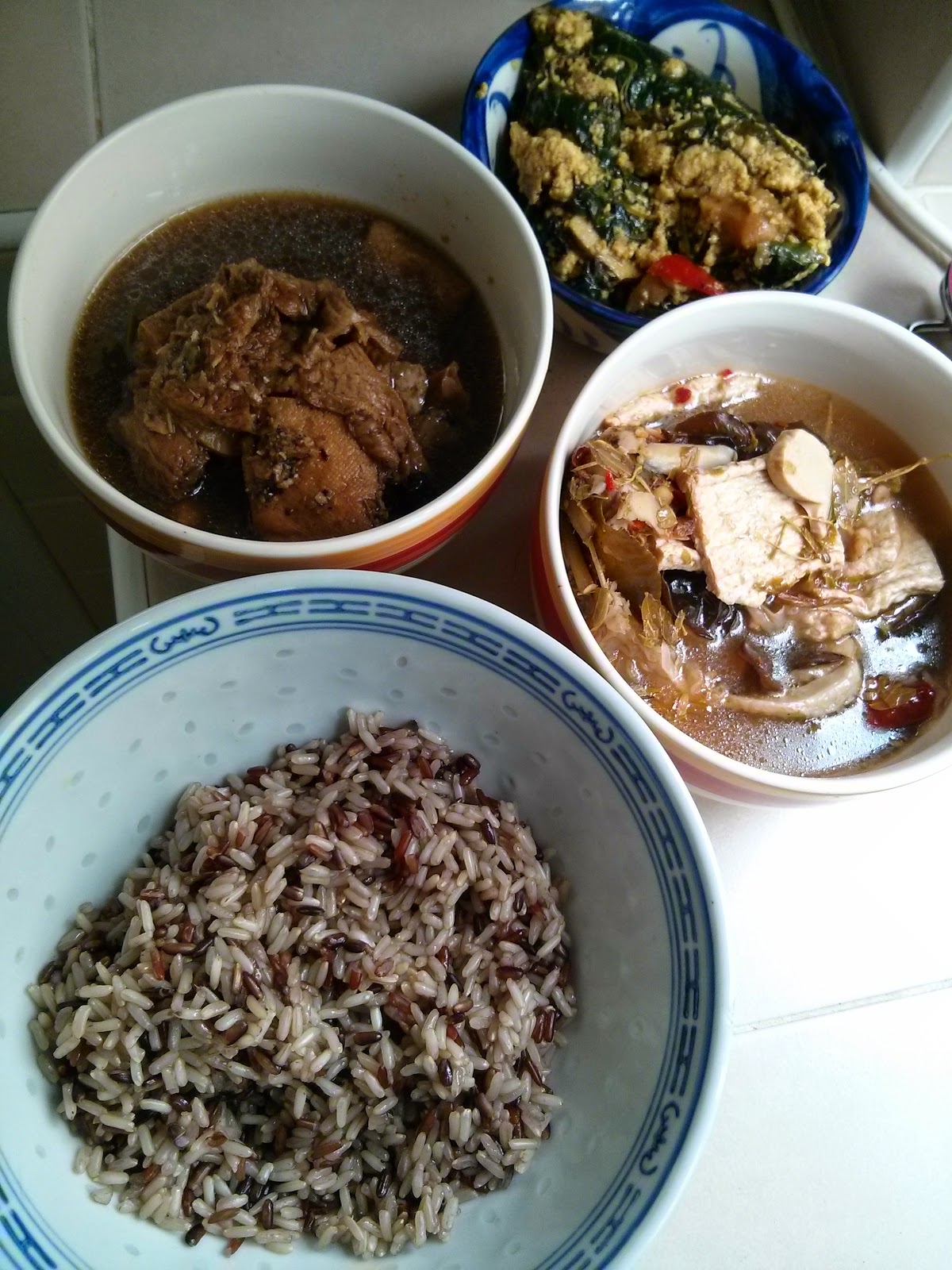
So more and more we shift our food supply from supermarkets to street food stall around the corner. The selection is huge and it is always delicious. From vegetarian food to classics like Green Curry. Five Spices is our latest favourite, a very un-Thai dish with cinnamon. A whole meals with rice and five dishes is not more than 130 baht, thats less than 5 USD.

Is it safe to eat street food? Yes and No. It depends on the stall and the time you buy it. Go early in the morning and its fresh. Around noon its there for a while. Usually around 5 pm you get fresh cooked food again, and at night you can be sure its not. Also, usually meat is not the filet mignon or chicken breast, but everything that's cheap. We eat mainly vegetarian, so it's easy. Also, fish isn't always the best choice. The bigger the fish the more likely it's not from one of the klongs. Thai food also isn't the most healthy food, they use way too much salt and saturated fat. But the right mix with some fresh veggies and fruits can keep you and your purse healthy.


Friday, March 28, 2014

Thai Bike Train

I am following right now the trip Richard Barrow and others doing using a new service called Thai Bike Train. It is apparently part of the train to Ayuthaya, with 3 carriages rebuild with bike stands, as far as I understand. I think there is a huge potential for bike transport in Thailand, and recently saw a tweet by @_bm showing even a taxi with a bike rack. Even in this hot climate, Thailand isn't bad at all for biking, thanks to zillions of refrehment stalls its really manageble. 

Personally I like biking, but just for the sake of fun and exercise. It seems many expats take it quite serious here and won't even come close to a bicycle without proper (and fashionable) gear. Oh, and it needs to be a branded bike for them as well. 

So, let's see what comes out of this Bike Train trip. Could be something rare in Thailand: Good news for tourism.

Thursday, March 27, 2014

What Facebooks knows about me in Thailand

Facebook faced a lot of criticism for it's privacy issues - and many alleged them to gather data to make us totally transparent. I don't think even the best algorithms these days can actually describe us by what we do on Facebook. Or let;'s say, they maybe can do, but there is no reason for Facebook to use it, if so.
These are the people Facebook suggested to like me:


If this wasn't a "dumb" machine, it would have know that it doesn't make sense to suggest me both leaders of opposite political parties. It wouldn't suggest me a random singer. It is only suggesting it because some people I know like them, and that's enough for Facebook. It's currency is likes and engagements, and popular people likely create more likes and engagement than some niche groups or pages.

So, I am not so much concerned about what Facebook and Google do with my data. I am concerned what governments do. They are the threat. Still.

Friday, March 7, 2014

A little slum at Bangkoks east

Most people have heard about Klong Thoei, a slum in the heart of Bangkok. But this isn't the only one. Doing some research for a documentary I went to the On Nut Waste Plant community. Right behind the recycling facility is a slum where many of the factory workers live.

Waste plant slum

Wikipedia defines a slum as "A slum is a heavily populated urban informal settlement characterized by substandard housing and squalor.[1] While slums differ in size and other characteristics from country to country, most lack reliable sanitation services, supply of clean water, reliable electricity, timely law enforcement and other basic services."

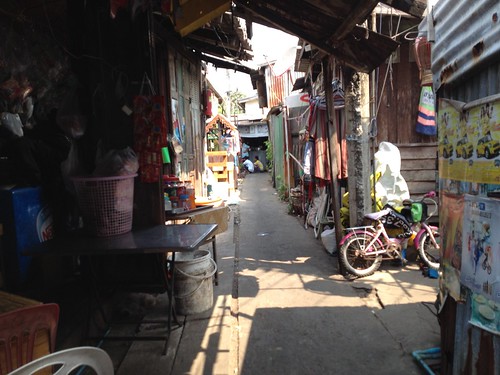
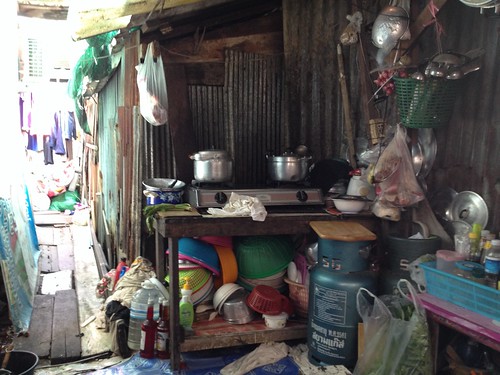
The area I visited is indeed quite populated, although I couldn't get any numbers. Houses are for sure substandard, but some are actually not too bad, made of wood or even bricks. Sanitation seems to be an issue, guessing from the sewage that flows underneath the houses. Regarding clean water, there seems to be at least a water supply, and I saw in one house a filtration system installed.

Waste plant slum

I was there for about an hour, and while it is a very packed area with narrow footpaths between houses, it is cleaner than expected. We did talk to some people and were told that the land belongs to some muslim owners who charge a few hundred baht rent for the land they build there houses on. We didn't get much more into details since this will be the content of a documentary we want to make there.